
The golden 1:2 espresso ratio explained
The 1:2 ratio—where 1 gram of coffee produces 2 grams of liquid espresso—achieves the mathematical sweet spot of 18-22% extraction yield and 8-12% strength (TDS), creating balanced espresso that extracts desirable acids and sugars without excessive bitterness. This ratio represents the convergence of extraction chemistry, decades of sensory research, and practical brewing constraints, making it the industry standard for traditional espresso while serving as an essential starting point for optimization based on roast level, equipment quality, and personal preference.
Why the 1:2 ratio produces optimal espresso extraction
The ratio works because of how coffee compounds dissolve sequentially during extraction. Acids extract first in the initial 10 seconds, providing brightness and acidity. Sugars dissolve during the middle phase (10-20 seconds), adding sweetness and caramel notes. Bitter compounds emerge in the late stage (20-30+ seconds), contributing depth but risking harshness if over-extracted. The 1:2 ratio with standard parameters—9 bars pressure, 90-96°C temperature, 25-35 seconds extraction time—captures acids and sugars while limiting bitter compound extraction.
The mathematical relationship is precise: For a 20% extraction at 10% TDS, only a 2:1 ratio works. Using an 18g dose producing 36g output at 10% TDS yields 3.6g dissolved solids, which equals exactly 20% extraction (3.6g ÷ 18g). Coffee scientist Scott Rao established that brew ratio approximates the ratio of extraction percentage to TDS: 20% ÷ 10% ≈ 2. This isn’t coincidence—it’s physics and chemistry converging on an optimal balance.
The Specialty Coffee Association recommends 18-22% extraction for balanced flavor, though modern research from UC Davis and Barista Hustle suggests extractions up to 24% can be desirable with even extraction and high-quality beans. Below 18% produces sour, thin, weak espresso. Above 22% risks bitter, dry, astringent flavors. The 1:2 ratio consistently delivers results within this optimal window when combined with proper technique.
Achieving the 1:2 ratio with precision
Executing a proper 1:2 shot requires specific equipment and systematic workflow. You need a digital scale with 0.1g precision that fits under your portafilter (Timemore Black Mirror, Acaia Lunar, or basic scales from Greater Goods work well), a burr grinder capable of fine espresso grind with micro-adjustments for dialing in, and an espresso machine delivering 9 bars at the group head with temperature around 93-96°C. A calibrated tamper applying 30 lbs pressure completes the essential toolkit.
The dialing-in process follows a specific sequence. First, lock in your dose—typically 18g for a double basket (range 16-20g depending on basket capacity). Weigh grounds to ±0.1g accuracy using your scale’s tare function. This dose remains constant during dialing; it’s your foundation. Second, set initial grind slightly finer than table salt, aiming for roughly 25-35 seconds as a starting point. Pull a test shot—if it extracts in under 20 seconds, grind finer; over 40 seconds, grind coarser.
For the actual shot execution, distribute grounds evenly in the basket using a WDT (Weiss Distribution Technique) tool to break up clumps, tamp with level 30 lb pressure until coffee stops compressing, then lock the portafilter. Place your cup on the scale under the portafilter and tare to zero. Start your timer when you press the brew button, not when espresso begins dripping—extraction starts when water contacts coffee, including pre-infusion time. Watch the scale and stop extraction when it reads 36g for your 18g dose, achieving the 1:2 ratio. Note the total time for consistency.
Shop the essentials
The small upgrades that make a home coffee setup cleaner, smoother, and more enjoyable to use every day.

Cleaner & Descaler Tablets
Keeps your machine clean, helps prevent buildup, and protects long-term performance.
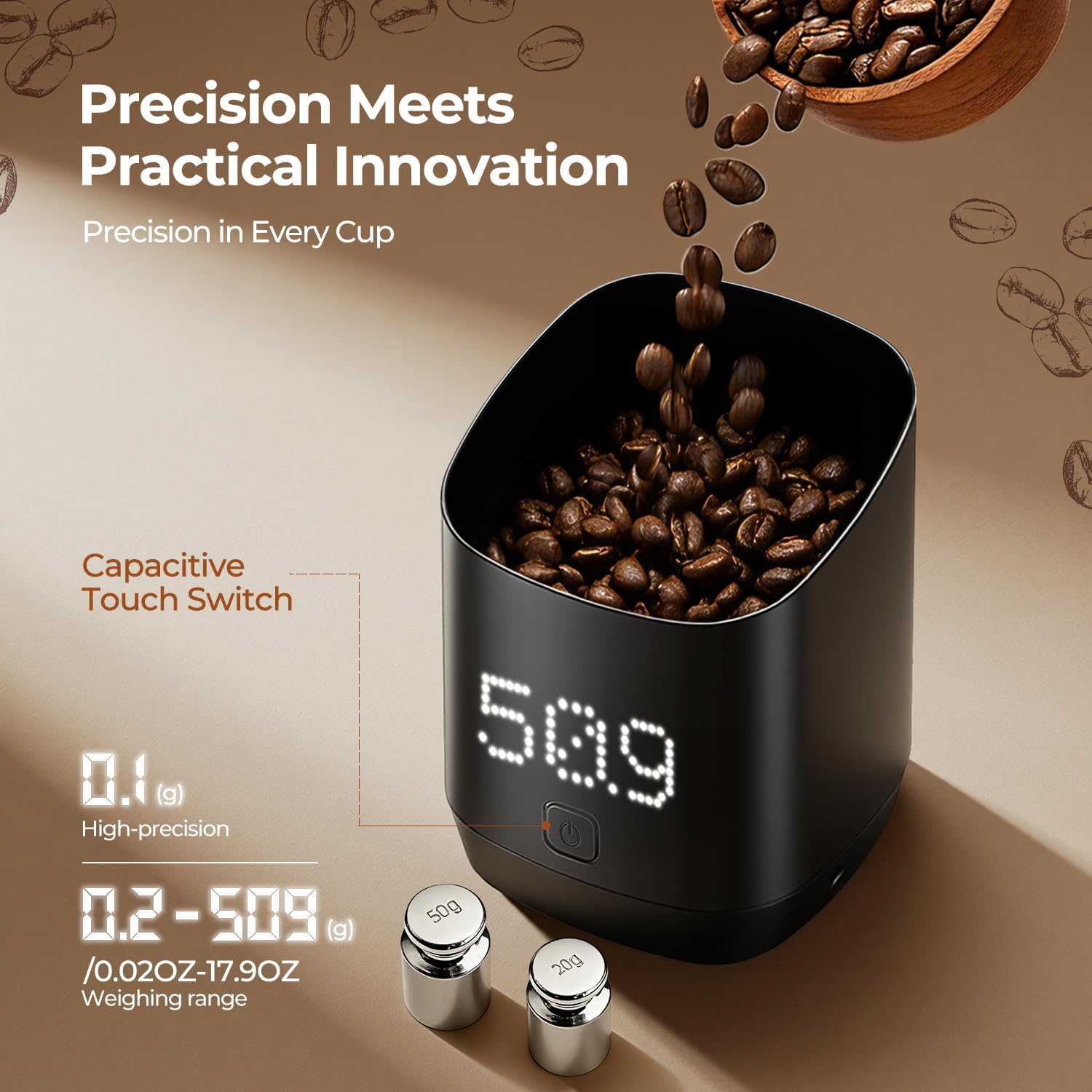
Digital Dosing Cup
Makes weighing beans faster and cleaner, with less mess around the grinder.
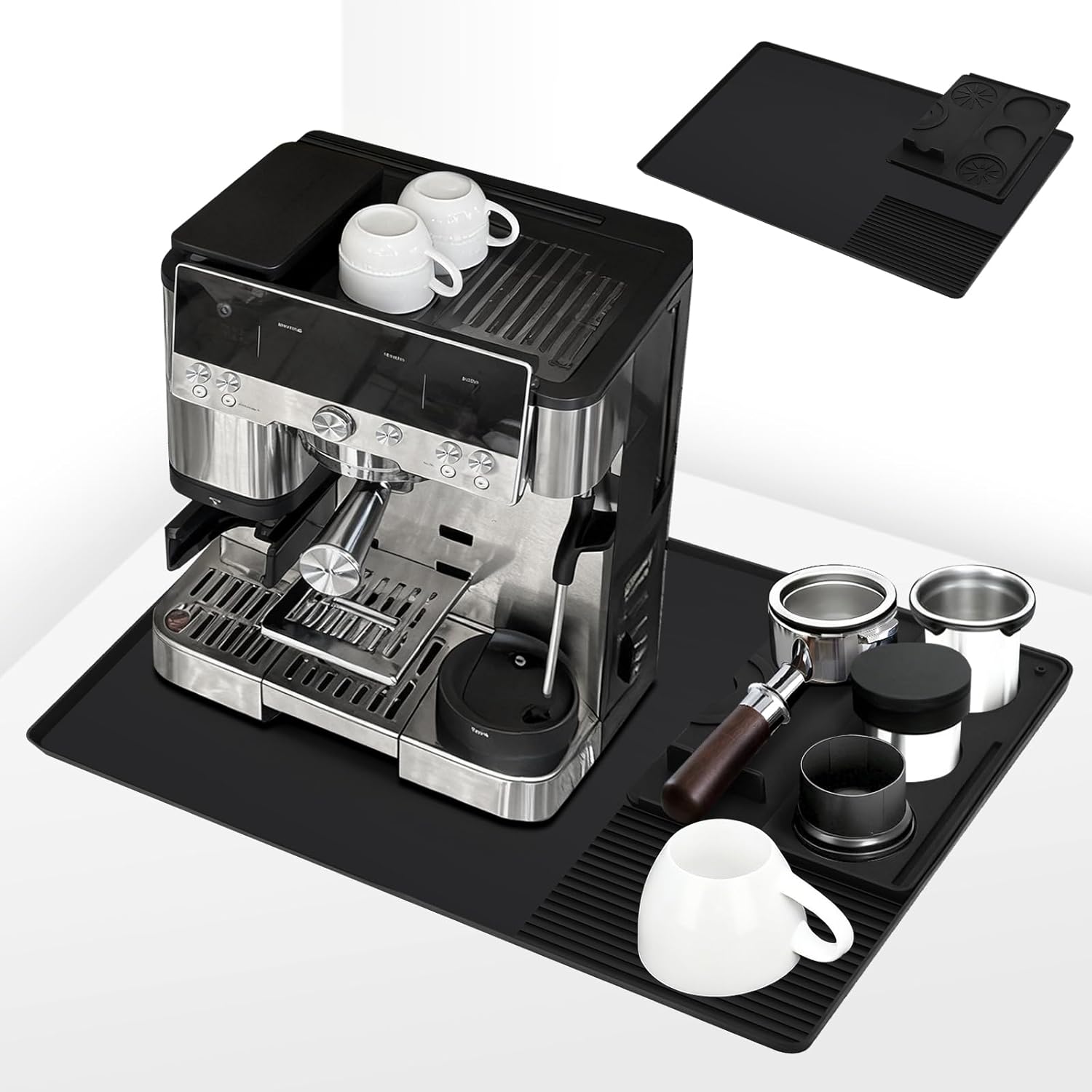
Silicone Mat
Protects your counter, catches spills, and gives your setup a cleaner working surface.

Vacuum Coffee Canister
Helps beans stay fresher longer by limiting air exposure after opening the bag.
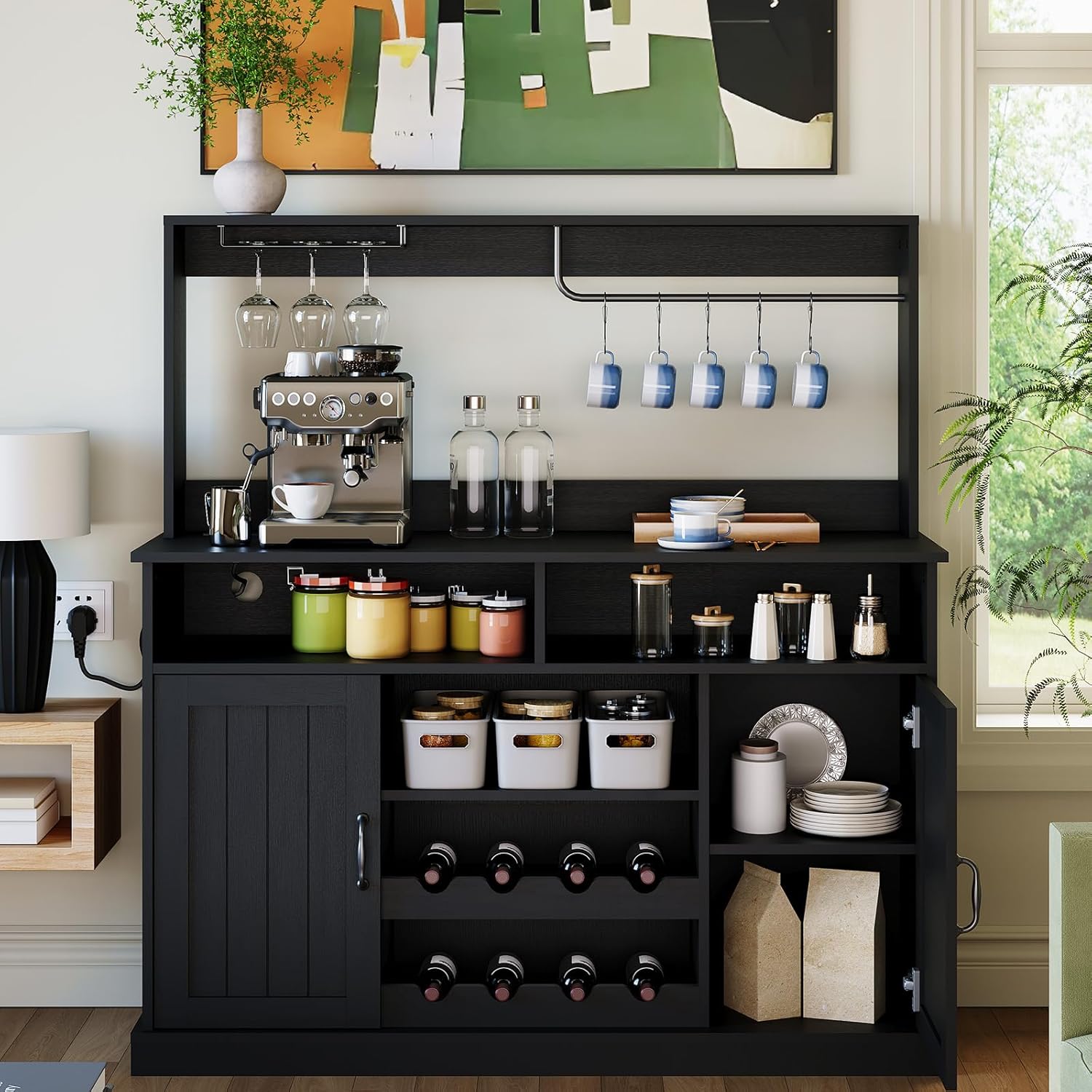
Farmhouse Coffee Bar Cabinet
Gives your machine, cups, beans, and accessories one dedicated home instead of cluttering the kitchen.
Temperature and pressure operate as background parameters you typically set once and maintain. Standard espresso machines deliver 9 bars pressure at the brew head—this is industry standard since the 1960s and not adjusted during dialing. Temperature defaults to 93°C (200°F) on most machines, though you can adjust: lower temps (90-92°C) reduce extraction for dark roasts, while higher temps (94-96°C) increase extraction for light roasts. Time serves as a consistency indicator rather than a rigid target—many excellent shots fall outside 25-35 seconds. Light roasts often take 40+ seconds, while modern turbo shots can extract beautifully in 15-20 seconds.
Starting recipes for different coffee types
A standard medium roast baseline uses 18g dose producing 36g yield in 28-30 seconds at 93°C. For dark roasts, reduce yield to 27-32g (1:1.5-1:1.75 ratio) in 25-28 seconds to avoid bitterness—darker beans extract more easily and longer ratios pull excessive bitter compounds. Light roasts benefit from extended ratios of 40-44g (1:2.2-1:2.4) in 30-40+ seconds, often requiring higher temperatures (95-96°C) because lighter roasts are denser and harder to extract. If struggling with light roasts, try reducing dose to 16-17g—lower doses extract more evenly, especially for challenging beans.
How ratios differ across brewing methods
The 1:2 ratio applies exclusively to espresso, not other brewing methods. The dramatic difference stems from espresso’s pressurized extraction and fine grind creating highly concentrated beverage. Pour over methods like V60 and Chemex use 1:15 to 1:18 ratios—most commonly 1:16-1:17 for balanced cups, meaning 30g coffee produces 500g brewed coffee. French press typically employs 1:12 to 1:16 ratios with coarser grind and full immersion. Standard drip coffee uses 1:15 to 1:18 ratios, approximately 10g per 6-ounce cup.
Within espresso, alternative ratios serve specific purposes. Ristretto (1:1 to 1:1.5) produces restricted, short shots with heavy body and viscous texture—ideal for dark roasts or milk drinks where coffee must stand up to dairy. An 18g dose yields just 27g output in 20-25 seconds, stopping extraction before bitter compounds dissolve while emphasizing sweetness and chocolate notes. Lungo (1:3 to 1:4) creates longer, lighter shots with more clarity—particularly effective for single-origin coffees highlighting unique characteristics. That same 18g dose produces 54-72g output in 30-60 seconds, pulling out nuanced notes like adding water to whisky.
Modern innovations have expanded the ratio landscape. Turbo shots, gaining prominence since 2020 research by Dr. Christopher Hendon, use lower doses (15-18g), coarser grind (similar to AeroPress), reduced pressure (6 bars versus 9), and faster extraction (15 seconds). A typical turbo shot pulls 15g to 40g (1:2.6 ratio) in 15 seconds, delivering enhanced sweetness and flavor clarity with lighter body. These work brilliantly for light-medium roasts and provide more forgiving extraction with less channeling. Allongé style (1:5 to 1:6) associated with Scott Rao and Montreal specialty coffee produces tea-like, fruit-forward shots—18g yielding 90g in roughly 30 seconds using coarser grind, emphasizing sweetness and clarity while maintaining espresso brewing method.
Adjusting ratios based on roast level and coffee characteristics
Roast level serves as the primary determinant for ratio selection. Dark roasts require tighter ratios (1:1 to 1:2) because they extract more easily—their cellular structure is more porous from longer roasting. Pulling dark roasts at 1:2.5 or longer risks over-extraction and excessive bitterness. Stick to 1:1.5 to 1:2, shorter extraction times (22-25 seconds), and lower temperatures (90-92°C) for optimal results.
Light roasts demand longer ratios (1:2.5 to 1:4) because they’re denser with harder-to-extract compounds. At a standard 1:2, light roasts often taste excessively acidic and dry—the acids extract readily but sugars remain locked in dense cell structures. Extending to 1:2.5 or 1:3 brings out sweetness and reduces sourness. Light roasts benefit from higher temperatures (95-96°C), finer grind settings, longer extraction times (28-32+ seconds), and often pre-infusion. Many specialty roasters recommend 1:2.5 pulling in 22-24 seconds for light single origins.
Medium roasts offer the most flexibility (1:1.5 to 1:2.5), with 1:2 serving as an ideal starting point. They work well for both straight shots and milk drinks, represent the sweet spot for most commercial applications, and forgive slight deviations in technique. The shift in specialty coffee toward lighter roasts has moved the industry median from traditional Italian dark roasts to lighter third-wave profiles, necessitating longer ratios across the board.
Coffee origin and processing also influence optimal ratios. Single origins are more sensitive to ratio changes and often benefit from experimental approaches at longer ratios (1:3) to showcase unique characteristics, especially when roasted lighter to highlight terroir. Blends are more forgiving due to homogeneous particle distribution where different origins balance each other. Natural/dry processed coffees handle wider ratio ranges and tend toward fruity, wine-like flavors that benefit from clarity-enhancing longer ratios. Washed coffees require tighter parameter control but work well at standard ratios. High-altitude, dense beans benefit from longer ratios (1:2.5+) to achieve full extraction.
Troubleshooting extraction problems systematically
When extraction runs too fast (under 20 seconds), your shot tastes sour, sharp, acidic with thin body and light crema. Grind finer as your primary adjustment—finer grind increases surface area and resistance, slowing water flow. Make small incremental adjustments and purge a few grams through the grinder after changes to clear old settings. You can also increase dose by 0.5-1g to create more resistance, though higher doses are harder to extract evenly. Check tamping technique—apply firm, even 30 lb pressure and ensure level tamp, as uneven tamping causes channeling where water finds paths of least resistance.
When extraction runs too slow (over 35 seconds), your shot tastes bitter, astringent with dark oily crema and harsh, dry mouthfeel. Grind coarser to reduce resistance and speed flow, adjusting incrementally to avoid overshooting. Don’t obsess over hitting exactly 25-35 seconds—taste is the ultimate metric, and many excellent shots fall outside this window. You can decrease dose by 0.5-2g, particularly helpful with light roasts that are hard to extract. Address distribution issues using WDT tools to break up clumps—poor distribution creates inconsistent density where paradoxically grinding too fine can result in faster extraction due to channeling. Verify you’re not overdosing the basket, which prevents proper expansion and creates excessive resistance.
Channeling produces the distinctive signature of simultaneously bitter AND sour flavors—some particles over-extract while others under-extract. Visual diagnosis using a bottomless portafilter reveals the problem: first drops emerge from one specific spot rather than evenly, gaps appear in the flow showing metal basket, and severe cases produce jets or sprays shooting from the basket. Post-extraction puck inspection shows holes or cracks, uneven coloration with wet and dry spots, and inconsistent compaction. Root causes include poor distribution from clumpy grounds, uneven tamping creating height differences even 1mm apart, grinding too fine which amplifies preparation defects, and equipment issues like wet baskets or wrong basket sizes.
The solution is systematic puck preparation. Use a dosing funnel during grinding to contain grounds, then apply WDT (Weiss Distribution Technique)—now considered essential, not optional—using thin needles (0.3-0.4mm diameter) to stir from bottom to top, de-clumping and evenly distributing grounds. Finish with level, firm tamping, pressing until coffee stops moving rather than applying maximum force. This three-step routine dramatically reduces channeling and increases extraction consistency.
Current best practices and workflow optimization for 2025
Modern dialing-in philosophy has shifted away from rigid timing targets toward taste-first, systematic workflows. The current expert consensus follows this sequence: lock in dose first (typically 18-20g for doubles, sometimes 1-2g less for light roasts to improve extraction), make quick initial grind adjustments to reach the ballpark of 1:2 in roughly 25-35 seconds without overthinking, then adjust brew ratio to taste as your primary lever. If the shot tastes too sour, increase ratio to 1:2.2 or 1:2.5 by pulling longer. If too bitter, decrease ratio to 1:1.8 by pulling shorter. If simultaneously bitter AND sour, you have a channeling issue requiring better puck prep rather than ratio adjustment.
Once you’ve found your ideal ratio through taste, grind as fine as possible while maintaining balance. This critical principle drives quality—finer grinding extracts more soluble compounds, increasing complexity, body, and texture. Keep grinding finer incrementally until flavor drops off, indicating channeling is occurring, then back off one step coarser to find the optimal grind. Temperature adjustment comes last if available: most machines default to 93-94°C which works for medium roasts, but lower to 92°C for dark roasts or raise to 95-96°C for light roasts.
Equipment quality matters significantly. Essential tools include precision scales (0.1g accuracy), WDT tools with thin needles, dosing funnels, and bottomless portafilters for diagnosing channeling. Spring-loaded tampers ensure consistency. Precision baskets (VST, Pullman) with laser-cut holes provide more even extraction than standard baskets. Grinder quality is paramount—better grinders with narrow particle size distributions enable higher extractions at various ratios without bitterness.
Coffee freshness critically impacts results. Use coffee 7-21 days past roast date for optimal extraction. Very fresh coffee under 7 days produces unstable, excessive crema. After 15 days flavor degrades noticeably. Beans older than 3 weeks become porous as CO2 escapes, making proper extraction impossible regardless of technique adjustments. Equipment cleanliness affects every shot—backflush daily if your machine has a 3-way valve, wipe the shower screen after every few shots, and deep clean baskets regularly.
The specialty coffee industry has moved away from dogmatic adherence to any single ratio. Modern understanding recognizes that the “best” ratio depends on equipment capability, coffee characteristics (origin, roast, density, processing), intended use (straight espresso versus milk drinks), and personal preference. Experimentation within the 1:1.5 to 1:3 range for espresso, guided by taste rather than arbitrary timing targets, produces superior results. Success requires scales for precision, understanding of extraction principles, and willingness to adjust based on flavor rather than following rigid rules.
The 1:2 ratio remains the industry standard and optimal starting point because it mathematically achieves balanced extraction and strength for the widest range of coffees and equipment. But it’s a foundation for optimization, not an absolute—the golden ratio is ultimately the one that makes your specific coffee taste best in your cup.
We’ve categorized the best espresso machines for every kind of buyer
Find the right shortlist faster, whether you want convenience, a beginner-friendly setup, a smaller footprint, or better value at a given budget.
Best Superautomatic Espresso Machines
One-touch picks for speed and convenience.
Best Espresso Machines for Beginners
Easy-to-use machines with a smoother learning curve.
Best Small Espresso Machines
Compact machines for tighter kitchens and counters.
Best Espresso Machines With Built-In Grinder
All-in-one options with fewer extra pieces to buy.
Best Cheap Espresso Machines Under $500
Budget picks that still make sense for real espresso.
Best Prosumer Espresso Machines Under $1000
More serious machines with stronger value for the money.
Best Single Boiler Espresso Machines
Simple, space-saving picks for espresso-first routines.