
01 / 6
Identify this exact bag
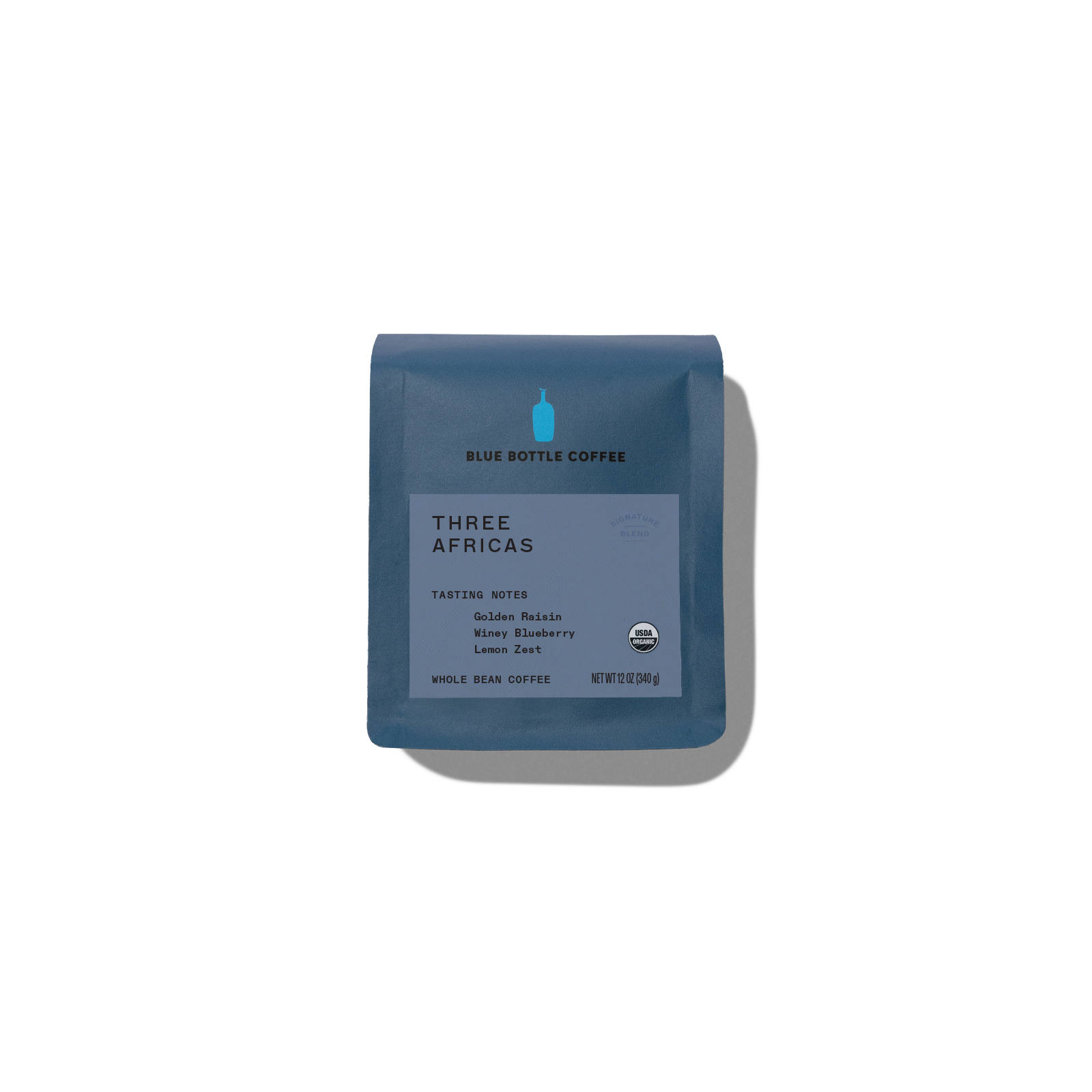
This review concerns the current US Three Africas whole-bean blend, not Blue Bottle’s bottled cold brew or a Korean 250 g regional pack. The US page describes two Ethiopian components, one washed and one natural, with a Central African coffee. Its 2026 sourcing feature names Rwanda for that component. The complete farms and varieties are not fixed on the product panel, so check the actual delivered bag before assigning an immutable recipe. [1]
The listing calls Three Africas medium roast and elsewhere says the components are roasted with a light touch. Those are roaster descriptions, not an independently measured roast color. Its exact distinction from Giant Steps is a fruit-and-citrus target and declared cold-brew role; Giant Steps is the darker cocoa-led option. [1] [7]
02 / 6
What the flavor evidence can say
Golden raisin, winey blueberry and lemon zest are Blue Bottle’s target notes. A March 2026 independent home account prepared a particular bag as hot filter coffee, while an older owner discussion describes differing fruit impressions. Neither source can tell us what a new US cold-brew batch tastes like after a long immersion. [1] [3] [4]
Blue Bottle’s washed and natural Ethiopian components offer a plausible reason for its advertised fruit range, but processing does not guarantee those notes in every cup. Choose a single bag, write down grind, water and steep time, and compare it black before using milk that may mask the fruit you bought it for.
03 / 6
Brew it for its intended role
The roaster explicitly says this blend has depth and luminosity when cold-brewed, but the product panel’s 27 g to 350 g hot pour-over guide is not a cold-brew recipe. Follow a dedicated immersion method, use coarse grounds and cold water, filter and refrigerate promptly. Record concentrate dilution separately from the steep recipe. [1] [2]
If the first cold cup feels flat, do not infer a defective bag from a single steep: water, grind, time and dilution all change the result. Use the same brew vessel and serving dilution when comparing Three Africas with Peet’s Baridi or Big Bang. A hot bloom schedule should not be transplanted into a cold vessel.
04 / 6
Roast date and storage
Inspect the printed roast date on delivery and keep the whole beans sealed away from heat, moisture and odors. Grind just before steeping. The official 12 oz image does not verify the date of the shipment, and a cold-brew batch does not make stale storage irrelevant. [5] [6]
A 340 g bag yields about eleven 30 g brews before waste. A concentrate made at a higher dose uses the bag faster; the economics of a larger order depend on actual household consumption and the finished brew’s safe storage, not on an assumed serving count.
05 / 6
Value at this US check
The US page mixes subscription and one-time selectors and does not establish one delivered total for the exact selected pack at this check. This review makes no price or discount claim. Confirm the chosen 12 oz whole-bean option, shipping, tax and availability in the live cart. [1]
The case for Three Africas is its documented fruit-led composition and cold-brew positioning. It is a weak match if the buyer’s only goal is a heavily milk-diluted chocolate drink; the existing Giant Steps review explains that darker alternative.
06 / 6
Choose another bag for another task
Peet’s Baridi is another cold-brew-first blend but its current page shows an availability warning. Baridi’s shop and café identity does not establish a sensory win over Three Africas. Compare the exact active US product, not Peet’s prepared café beverage with a bag of Blue Bottle beans. [1] [7]
Peet’s Off the Grid is a washed Colombia-and-El Salvador direction with a more chocolate-and-pear brief. If the buyer mainly brews hot espresso, Verve Sermon has a more explicit espresso role. These are documented use-case contrasts, not a blind tasting ranking.
Evidence and limits
How this review was made
This is a research-led US assessment of the exact named whole-bean product. Current roaster pages control identity and attributed flavor targets. Independent accounts and selected owners are limited by lot, date, preparation and possible commercial interest. Coffeedant has not bought, brewed, tasted, measured or photographed this coffee and assigns no numeric sensory score.
Sources were checked October 22, 2026. Verify the actual pack, roast date, component panel, current stock and checkout total before ordering. Product photography illustrates identity and does not certify the shipment.
Quick answers
Three Africas FAQ
What is Blue Bottle Coffee Three Africas?
This review concerns the current US Three Africas whole-bean blend, not Blue Bottle’s bottled cold brew or a Korean 250 g regional pack. The US page describes two Ethiopian components, one washed and one natural, with a Central African coffee. Its 2026 sourcing feature names Rwanda for that component. The complete farms and varieties are not fixed on the product panel, so check the actual delivered bag before assigning an immutable recipe.
What does Three Africas taste like?
Blue Bottle Coffee lists golden raisin, winey blueberry, lemon zest, as described by Blue Bottle. Coffeedant has not tasted this bag.
Which brew method fits Three Africas?
The roaster explicitly says this blend has depth and luminosity when cold-brewed, but the product panel’s 27 g to 350 g hot pour-over guide is not a cold-brew recipe. Follow a dedicated immersion method, use coarse grounds and cold water, filter and refrigerate promptly. Record concentrate dilution separately from the steep recipe.
Are the origin and variety fixed?
Two Ethiopian components plus a Central African component identified in 2026 as Rwanda; lots may rotate Not specified for all current components Check the delivered pack for current lot details.
What package is pictured?
Blue Bottle Coffee US product photography. The pictured 12 oz bag identifies the blend; its roast date is not established by the photograph.
Is a displayed price guaranteed?
No. Confirm the exact whole-bean size, order mode, stock, shipping and tax in the live US cart.
How should I store it?
Check the roast date, seal opened whole beans away from air and heat, and grind shortly before brewing.
Trace the claims
Sources
- Blue Bottle Coffee US: Three Africas
Current exact product identity, roaster descriptions, formats and availability; checked October 22, 2026. Checked 2026-10-22.
- Blue Bottle cold-brew collection
Current collection placement confirms the cold-brew role; product hot-pour numbers remain method-specific. Checked 2026-10-22.
- Island in the Net: Three Africas home bag
March 2026 personal hot-filter account; no controlled current-lot cold brew. Checked 2026-10-22.
- r/Coffee: Three Africas experiences
Self-selected older owner discussion; changing blend components and recipes limit transfer. Checked 2026-10-22.
- Stumptown whole-bean storage guidance
Independent roaster storage context; not proof of this delivered bag. Checked 2026-10-22.
- Coffeedant bean category
Exact canonical alternatives and existing reviews. Checked 2026-10-22.
- Coffeedant: Blue Bottle Giant Steps
Distinct research-led alternative review. Checked 2026-10-22.
- Product image source
Blue Bottle Coffee US product photography. The pictured 12 oz bag identifies the blend; its roast date is not established by the photograph. Checked 2026-10-22.
The choice
Buy Three Africas for its documented brew role
Three Africas is the clearest current Blue Bottle whole-bean route to a fruit-led cold brew: the roaster explicitly describes the blend cold-brewed, and its 2026 page identifies washed and natural Ethiopian coffees with a Rwandan component. Choose it when raisin, blueberry and citrus sound welcome rather than when you want an anonymous cocoa-only concentrate. Coffeedant has not brewed or tasted the current bag. Start with one whole-bean bag where available and let a repeatable personal brew decide any larger order.
Check Three Africas at the roaster