
Decision and evidence
The decision: how often do you switch?
A person who makes a regular espresso every morning and one decaf at night faces a different problem from a household alternating bags shot by shot. We selected four exact grinders with full Coffeedant reviews because they represent distinct ways to handle that change: a bellows-equipped electric single-doser, a lower-spend electric single-doser, a hand grinder used as a dedicated second path, and a higher-tier electric single-doser. We considered documented adjustment, dose handling, cleaning access, US availability and independent or owner evidence where available. This is a workflow shortlist, not a taste ranking. [1] [2] [3] [4]
First decide what “switch” means for you. If a small amount of regular coffee in a later decaf dose is unacceptable, a dedicated grinder and separate handling tools are the most defensible practical separation. If a routine purge is acceptable, a single-dose grinder with reachable grounds path and repeatable marks may be convenient. No source here certifies a caffeine-free output from a grinder recently used for regular coffee. [5] [6]
Decision and evidence
Retention is more than one number
Three quantities are often blurred: the difference between beans put in and grounds out for one dose, coffee that remains physically inside the grinder, and old coffee exchanged into the next dose. These are not interchangeable. Eureka reports about 0.55 g total retention for the Zero 65 AP under its own method; Kaffeemacher found 1.8 g absolute retention in its independent protocol. The disagreement is a measurement boundary, not a basis for choosing the smallest number. [5] [6]
Bon Appétit and The Coffee Chronicler each reported low output differences on their Opus 2 samples, but owners posted different outcomes. A bellows, ionizer or magnetic cup can reduce mess and carryover without proving that every internal surface is clean. If you alternate regular and decaf, weigh a few ordinary doses, purge according to the exact manual and watch what comes out after a setting change. Do not assign an invented percentage of caffeine transfer from a gram of retained grounds. [2] [7]
Four different routines
Quick comparison
| Grinder | Best role | Repeatability aid | Main limit |
|---|---|---|---|
| Eureka Mignon Zero 65 All Purpose | Electric espresso plus filter switching | Count full dial turns plus final mark; weigh output and purge when changing beans | The bellows and dial cost more and do not certify a clear next decaf dose |
| Fellow Opus 2 | Lower-spend electric single dosing | Record each bag and dial position; brush permitted grounds path | Owner retention reports differ; filter-first taste evidence is mixed |
| 1Zpresso K-Ultra | Manual second-grinder separation | Use it only for one bean type if separation is the priority; still clean it | Every espresso dose takes physical effort; hand grinding can be slow |
| Timemore Sculptor 078S | Electric single-dose control at a higher tier | Mark both coffee settings and verify the first output after a change | Higher spend and more setup than a simple manual separation plan |
Exact grinders, specific jobs
Four defensible picks

Electric espresso plus filter switching
Eureka Mignon Zero 65 All Purpose
Evidence: 65 mm AP burrs, revolution-counting stepless dial and bellows; independent absolute retention remains nonzero.
Tradeoff: The bellows and dial cost more and do not certify a clear next decaf dose.
Skip if: You need strict zero carryover or a lower-cost grinder.
Image and product: Eureka. Manufacturer or seller media for identification; no Coffeedant test photo.
Read the full review →
Lower-spend electric single dosing
Fellow Opus 2
Evidence: One stepless side dial, two cups and low retention in two independent sample protocols.
Tradeoff: Owner retention reports differ; filter-first taste evidence is mixed.
Skip if: You expect a zero-purge decaf change or need a dedicated filter grinder.
Image and product: Fellow. Manufacturer or seller media for identification; no Coffeedant test photo.
Read the full review →
Manual second-grinder separation
1Zpresso K-Ultra
Evidence: Portable hand grinder with external stepped setting and measured single doses.
Tradeoff: Every espresso dose takes physical effort; hand grinding can be slow.
Skip if: You make many daily drinks or cannot comfortably hand-grind.
Image and product: 1Zpresso. Manufacturer or seller media for identification; no Coffeedant test photo.
Read the full review →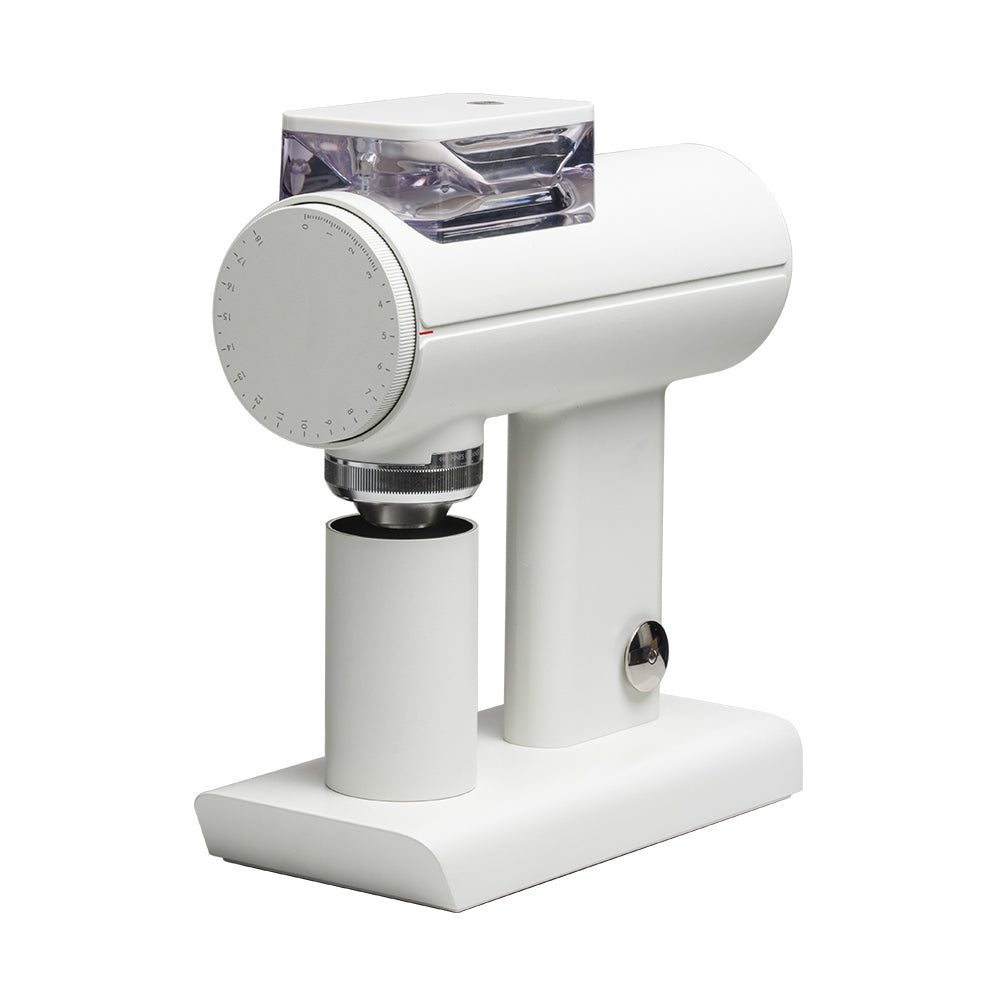
Electric single-dose control at a higher tier
Timemore Sculptor 078S
Evidence: Published single-dose design and adjustment approach in the full review.
Tradeoff: Higher spend and more setup than a simple manual separation plan.
Skip if: You only need an occasional decaf cup and already have a capable grinder.
Image and product: Timemore. Manufacturer or seller media for identification; no Coffeedant test photo.
Read the full review →Make the switch repeatable
Return to a setting without copying a stranger’s number
The Zero 65 AP dial has a revolution counter, so a large move from espresso toward filter can be written as a full turn count plus final mark. Opus 2 has a single 0–10 stepless side dial. K-Ultra uses an external stepped adjustment. Sculptor has its own adjustment mechanism. Each can supply a reference, but burr state, bag, roast date, humidity and basket can change the correct espresso grind. A saved number is a starting point, not an extraction guarantee. [1] [2] [3] [4]
Keep two cards: regular bean and decaf bean. Note dose, beverage yield, basket, grinder position and date on each card. When switching, follow the grinder’s safe cleaning and purge instructions, then confirm the first shot or brew. If decaf is only occasional, maintaining a separate hand grinder can be simpler than repeatedly moving an electric dial. If every user wants electric espresso, the effort tradeoff reverses.
Make the switch repeatable
Pay for the routine you will use
The selected US Zero 65 AP 110 V listing was $499 on October 20, 2026. The standard black Opus 2 was $199.95 in its October 15 review, with a backorder noted at that check. These are dated base prices for exact variants, not current checkout promises. Timemore and K-Ultra prices depend on exact version and seller; use their linked reviews and current cart rather than a stale cross-market table. [1] [2]
A single expensive “zero retention” grinder may not solve a strict separation need. A dedicated second hand grinder, second electric grinder or careful shared-grinder purge each has a different cash, counter-space and labor cost. Add a scale, separate bean containers and cleaning time. If you only drink decaf occasionally, choose the least complicated method you will actually maintain.
Make the switch repeatable
Clean for the exact model
Unplug before accessing burrs. Follow each manufacturer’s permitted cleaning path; a video for a different Mignon, first-generation Opus or different Timemore variant can have different screws and clearances. Dry-brush where allowed, keep water out of electrical parts, and reassemble before another dose. A bellows is for loose coffee, not a substitute for periodic care. [8] [9]
The first regular-to-decaf change on a new grinder is a good time to measure your own routine rather than trusting a marketing name. Record input and output masses, note visible retained grounds, clean as directed and compare the next dose. That does not measure residual caffeine, but it can expose a workflow that regularly leaves much more coffee behind than you expected.
Evidence and limits
How this guide was made
We selected exact currently reviewed products by adjustment return, single-dose handling, accessible cleaning, US configuration and the practical cost of a second grinder. Manufacturer retention claims, independent samples and owner anecdotes keep their own measurement contexts. Coffeedant has not ground, tasted, measured carryover or tested these units side by side.
Prices are dated where stated and are not current offers. This guide does not certify caffeine-free output after regular beans and does not convert retained-ground mass into a caffeine amount. A dedicated grinder is the straightforward separation choice when any carryover is unacceptable. Affiliate links do not determine selection.
Quick answers
Regular and decaf grinder FAQ
Can one grinder switch between regular and decaf?
Yes, with measured single doses, a repeatable setting record and a cleaning or purge routine. The evidence here does not certify zero regular-coffee carryover.
Does a “zero retention” grinder leave literally no coffee inside?
No. Eureka and independent Kaffeemacher figures for the Zero 65 AP are both nonzero and use different protocols.
Which choice gives the clearest practical separation?
A dedicated grinder assigned to one bean type avoids a routine cross-bean switch. It still requires normal cleaning and careful separate bean handling.
Should I purge before the first decaf dose?
Follow the exact grinder manual and your own tolerance. A purge can reduce old grounds but no quantified caffeine clearance was verified here.
Is a hand grinder suitable for espresso?
The reviewed K-Ultra supports espresso adjustment, but hand effort per dose is a real cost. Check basket and recipe on the actual bag.
Can I use one grinder setting for both coffees?
Rarely assume so. Save separate positions and dial each bag against a fixed dose and beverage target.
Are the listed US prices current at checkout?
No. They are dated product-review checks; verify exact voltage, finish, availability, tax and shipping with the seller.
Trace the claims
Sources
- Eureka Zero 65 AP official product ↗
Exact model, burr, dial, bellows and factory claims. Checked October 20, 2026.
- Fellow Opus 2 official product ↗
Second-generation dial, cups, US variant and single-dose design. Checked October 20, 2026.
- 1Zpresso K-Ultra official product ↗
Manual grinder identity and external adjustment; see full review for exact evidence. Checked October 20, 2026.
- Timemore Sculptor 078S official product ↗
Select the exact 078S variant, distinct from 078 and 064S. Checked October 20, 2026.
- Kaffeemacher Zero comparison ↗
Independent sample protocol and meaning of temporary, permanent and absolute retention. Checked October 20, 2026.
- Kaffeemacher Eureka grinder compendium ↗
Zero 65 AP absolute retention and other sample measurements. Checked October 20, 2026.
- The Coffee Chronicler Opus 2 review ↗
Independent sample filter, espresso and retention context; not a universal tolerance. Checked October 20, 2026.
- Clive Zero 65 AP manual ↗
Exact-model startup and care boundary. Checked October 20, 2026.
- Fellow Opus 2 safety manual ↗
Exact-generation cleaning and electrical precautions. Checked October 20, 2026.
- Bon Appétit grinder testing ↗
Separate Opus 2 low-retention sample protocol. Checked October 20, 2026.
The practical choice
Choose a repeatable separation routine
Use one grinder with a documented purge and setting record when small carryover is tolerable. Assign a separate grinder to decaf when it is not. Confirm the routine on the exact unit and beans you own.
Explore all grinders →