
The buyer decision
Selection method: fit the cup, then the press
French press is immersion brewing. Coffee and water remain in contact before the plunger separates the grounds; the mesh retains more oils and fine particles than a paper filter. That makes body and sediment part of the buyer decision, not proof that dark beans are universally better. We selected four current US whole-bean products with a direct press recommendation or a roaster-published press recipe and a distinct reason to buy. [1] [2] [3] [4] [5]
The shortlist covers a dark milk-friendly cup, a medium fruit-led coffee, a house blend with cream and a water-process decaf. We required exact product identity, a current roaster page, a full Coffeedant review, a relevant brew path and a useful limitation. We excluded generic “best coffee” claims without a clear press use, expired price-led picks and products whose only support was an old tasting of a different lot. [2] [3] [4] [5]
These best-for labels are editorial judgments from documentation, not a Coffeedant cupping or a controlled ranking. Blue Bottle’s 1:13 for Giant Steps and Equator’s roughly 1:15 are different roaster starts. Try one small bag, keep the grind and dose documented, then adjust from your own cup instead of treating a published ratio as a score.
The buyer decision
Use a press recipe, not a pour-over schedule
Blue Bottle’s French press guide advises a coarse grind because several minutes of immersion can overextract a fine grind. It separates the steep and decanting stage from the spiral pours on its dripper guide. Blue Bottle explicitly marks Giant Steps for press with milk at 1:13. Thirty grams of coffee to 390 grams of water preserves that ratio before adding milk; that arithmetic is a starting point, not a Coffeedant extraction. [1] [2]
Equator’s house blend gives a press start near 1:15; 30 g to 450 g is a corresponding calculation. Peet’s Big Bang is press-recommended but the product page does not prescribe one exact press dose. Night Light invites press and asks for a heavier dose, without providing a fixed ratio. Do not manufacture precision for the latter two. Use the roaster’s device guide or a familiar press recipe, and change one variable at a time. [3] [4] [5]
Decant the finished coffee when the recipe calls for it so grounds do not continue sitting in the drink. If your cup is gritty, inspect grinder particle distribution and pour technique before assuming a different bean will remove all sediment. If you want a very clean, bright cup, a paper-filter method may fit better than a press regardless of product.
Four defensible roles
Quick comparison
| Coffee | Best for | Roast | Think twice if |
|---|---|---|---|
| Blue Bottle Coffee Giant Steps | Dark press with milk | Dark | You want a light, clear, fruit-first cup |
| Peet’s Coffee Big Bang | Medium roast with fruit | Medium | You want a fixed single-origin lot or very dark roast |
| Equator Coffees Equator Blend | Coffee with cream | Medium-dark | You mainly need an espresso-specific shot recipe |
| Blue Bottle Coffee Night Light Decaf | Decaf press | Medium label; darker prose | You require a measured zero-caffeine guarantee |
Exact bags, stated use
The four picks
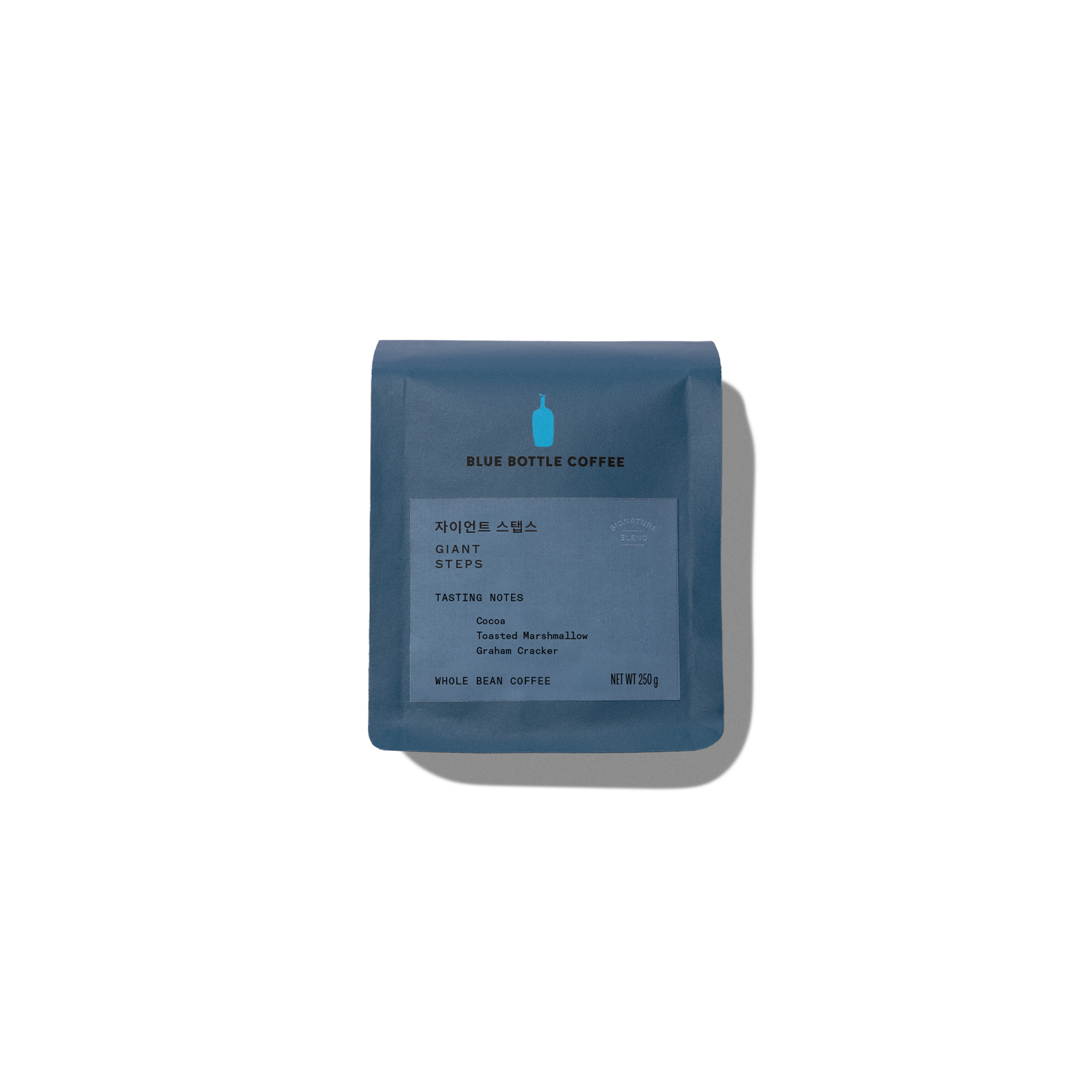
Dark press with milk
Blue Bottle Coffee Giant Steps
Evidence: Blue Bottle explicitly labels French press with milk and a 1:13 start.
Tradeoff: The current full origin and process breakdown is absent.
Skip if: You want a light, clear, fruit-first cup.
Image: Blue Bottle Coffee. Blue Bottle Coffee Korea product image. Korean 250 g packaging illustrates identity; US pack and size must be verified separately.
Read the full review →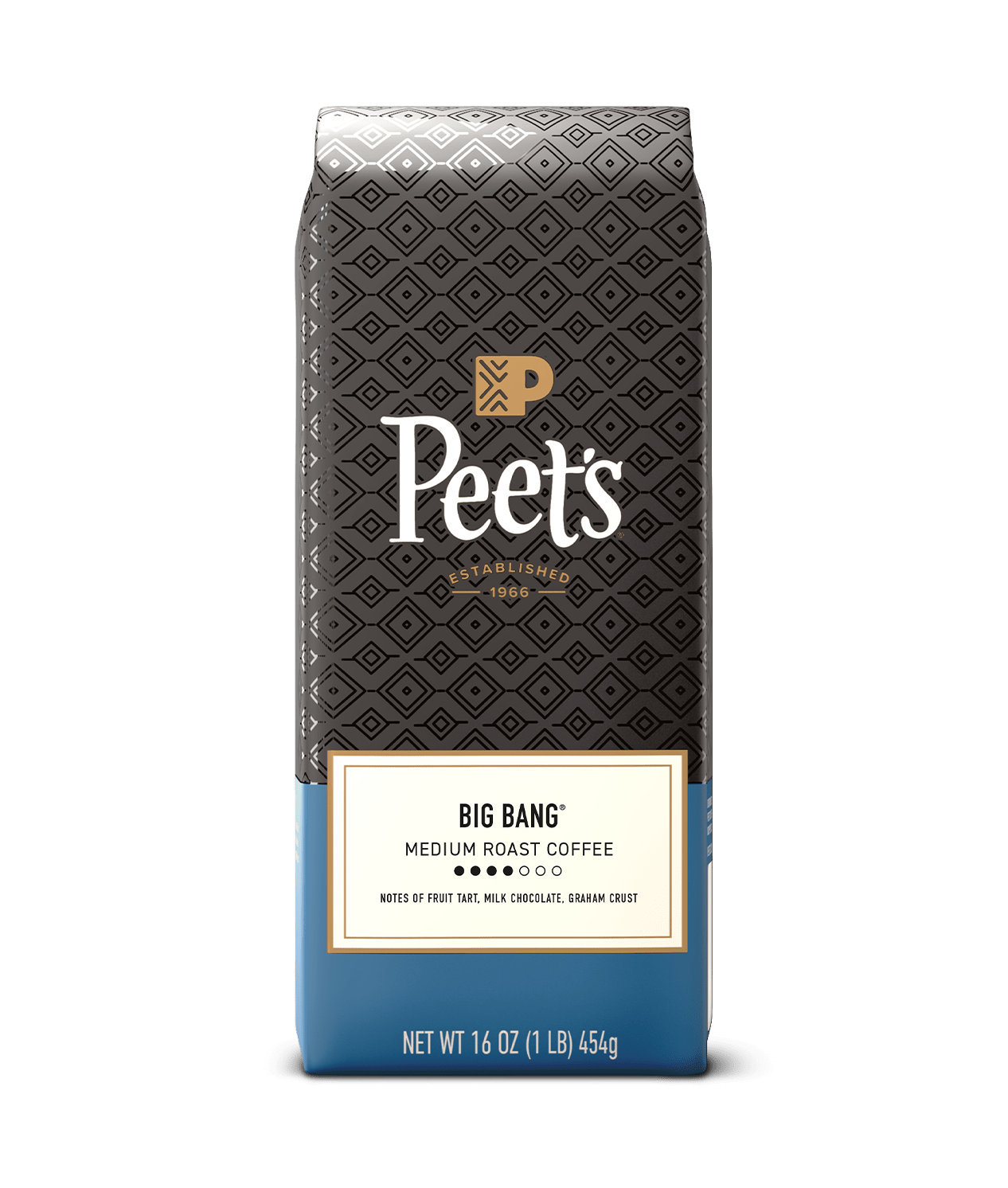
Medium roast with fruit
Peet’s Coffee Big Bang
Evidence: Peet’s names French press, pour-over and cold brew for this exact blend.
Tradeoff: Its fruit-tart brief may not suit a low-acid dark-roast buyer.
Skip if: You want a fixed single-origin lot or very dark roast.
Image: Peet’s Coffee. Official Peet’s Coffee product image for identification. Packaging is not proof of current contents or a Coffeedant tasting photo.
Read the full review →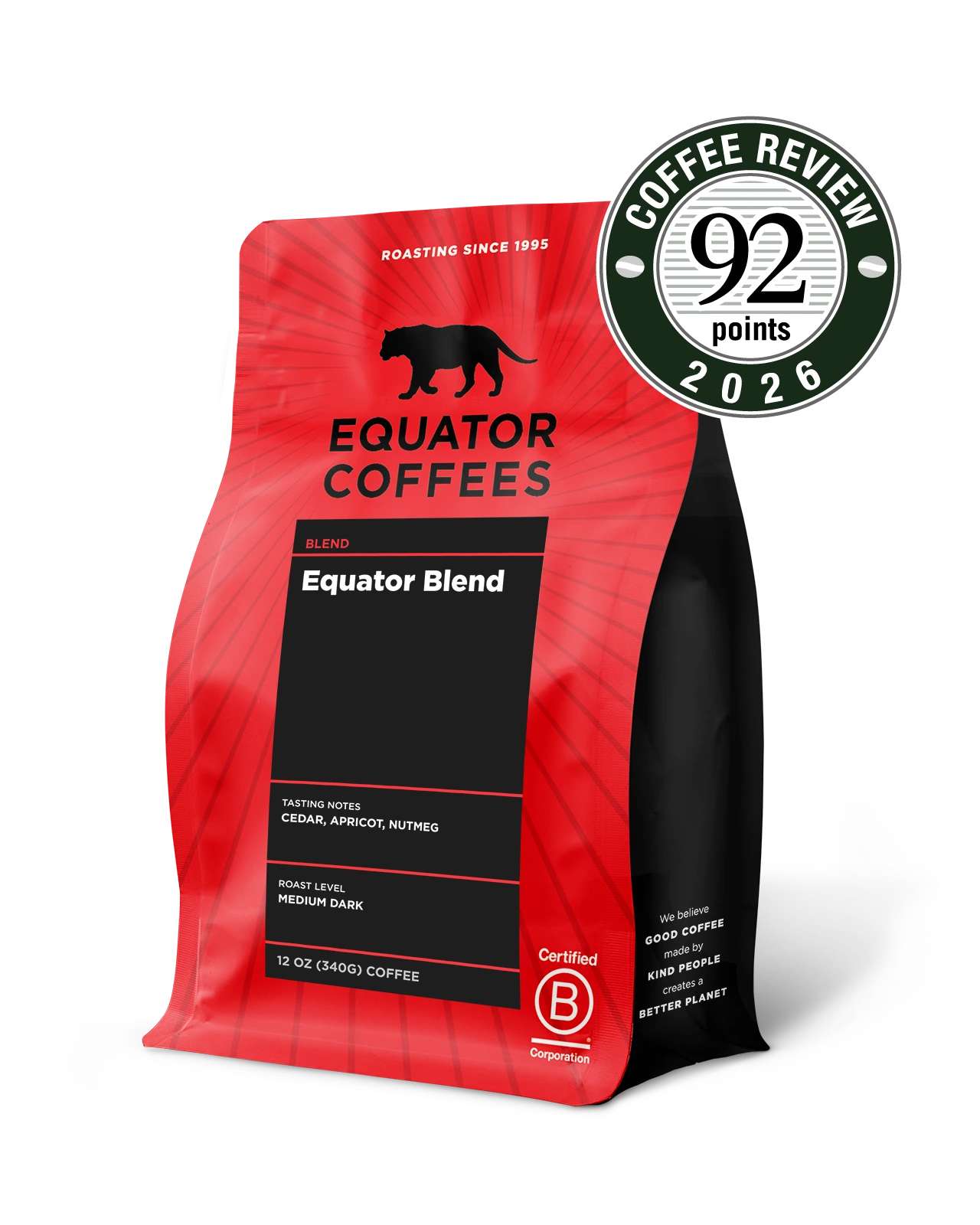
Coffee with cream
Equator Coffees Equator Blend
Evidence: Equator publishes a French press start near 1:15 for its house blend.
Tradeoff: The blend changes by component and the press recipe is not a taste guarantee.
Skip if: You mainly need an espresso-specific shot recipe.
Image: Equator Coffees. Official roaster product image for identification; packaging or printed notes may lag a current blend. No Coffeedant tasting photograph.
Read the full review →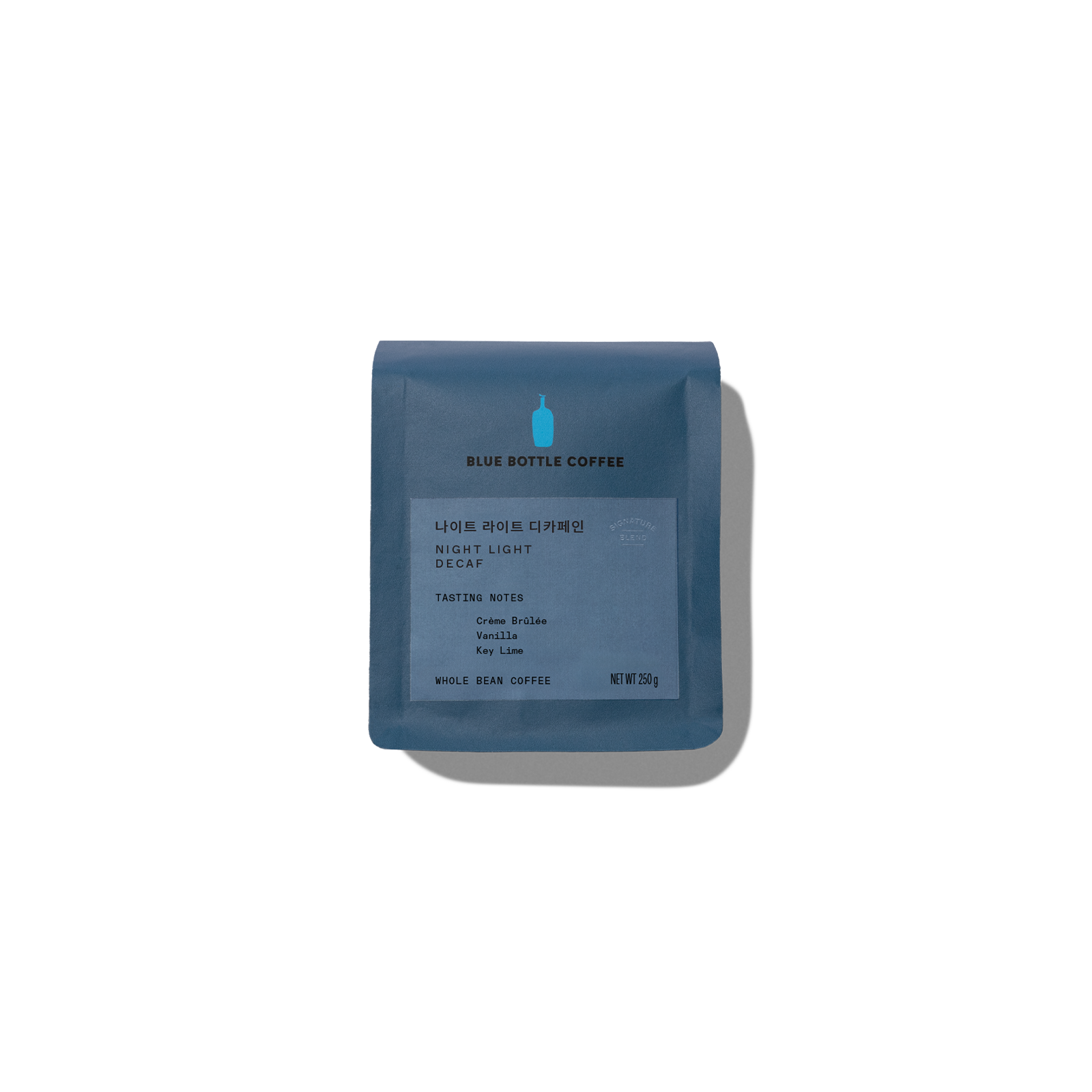
Decaf press
Blue Bottle Coffee Night Light Decaf
Evidence: Blue Bottle explicitly invites French press and espresso for its water-process decaf.
Tradeoff: It suggests a heavier dose but gives no exact product-specific press ratio.
Skip if: You require a measured zero-caffeine guarantee.
Image: Blue Bottle Coffee. Blue Bottle Coffee Korea product image. Its 250 g pack is illustrative; verify the separate US package and size.
Read the full review →Check the evidence, not just roast color
Detailed comparison
| Factor | Giant Steps | Big Bang | Equator Blend | Night Light Decaf |
|---|---|---|---|---|
| Best role | Dark press with milk | Medium roast with fruit | Coffee with cream | Decaf press |
| Roaster brew evidence | Blue Bottle explicitly labels French press with milk and a 1:13 start | Peet’s names French press, pour-over and cold brew for this exact blend | Equator publishes a French press start near 1:15 for its house blend | Blue Bottle explicitly invites French press and espresso for its water-process decaf |
| Roast direction | Dark | Medium | Medium-dark | Medium label; darker prose |
| Main limit | The current full origin and process breakdown is absent | Its fruit-tart brief may not suit a low-acid dark-roast buyer | The blend changes by component and the press recipe is not a taste guarantee | It suggests a heavier dose but gives no exact product-specific press ratio |
| US value | Check live US price | Check live US price | Check live US price | Check live US price |
Make a repeatable choice
Roaster notes point to four different directions
Blue Bottle gives Giant Steps cocoa, toasted marshmallow and graham cracker, with a dark roast and milk-friendly brief. Peet’s describes Big Bang as a medium coffee with fruit-tart character. Equator’s house blend mixes its own sweet, spiced and chocolate language with a cream-and-sugar role. Blue Bottle lists crème brûlée, vanilla and key lime for Night Light. These are attributed roaster notes, not flavors Coffeedant observed. [2] [3] [4] [5]
An older independent Giant Steps tasting found its press cup different from paper-filter cups; a 2026 Japanese Night Light account concerns a regional bag. The linked reviews show those sources and their limits. They do not establish a current US side-by-side comparison. The strongest recommendation here is about the documented role, not an invented sensory margin. [6] [7]
A press with milk can mute fruit and emphasize a heavier impression, but the result depends on dose, water, grind and milk quantity. Hold those steady if comparing two bags. If you dislike citrus or berry cues, do not buy a fruit-described coffee on the assumption that a mesh filter will remove them.
Make a repeatable choice
Judge the delivered roast date and quantity
Product photographs are identity aids, not proof of the roast date or current component harvest. Two Blue Bottle review images here show Korean 250 g packaging because that is the available credited product image; the US reviews explicitly identify that difference. Buy using the US product selector and inspect the actual pack you receive. [2] [5]
A 12 oz bag is about 340 g. At a 30 g press dose, it yields about eleven theoretical brews before dialing waste. If a household presses only on weekends, a large pack can age before it is used. Keep opened whole beans sealed, cool, dry and away from odors, then grind immediately before brewing. [8] [9]
Recurring blends can change components while preserving a flavor target. Peet’s, Equator and Blue Bottle product names do not lock one farm or variety indefinitely. Record the bag’s roast date and any component panel; recheck the roaster page on a later order.
Make a repeatable choice
Compare delivered US bags, not subscription tiles
The checked storefronts exposed size, one-time and subscription controls in ways that did not yield a reliably comparable delivered price across all four exact whole-bean packs. This guide therefore gives no price ranking or unverified discount. Compare the current one-time US size, tax, shipping and stock in the cart you would actually use. [2] [3] [4] [5]
A low price per ounce is wasted if the pack sits open or the roast direction is wrong for the household. Giant Steps earns a first-bag trial when the goal is dark press with milk; Big Bang when medium fruit sounds welcome; Equator Blend when coffee with cream is the routine; Night Light when decaf is the requirement. A separate grinder and clean water affect every one of those outcomes.
The press itself does not turn a bag into a substitute for a café espresso. If switching between espresso and press, use distinct grinder settings and ratios. Our separate espresso-and-drip guide and grinder reviews cover those decisions without pretending one recipe works everywhere.
Evidence and limits
How this guide was made
We matched current exact US roaster pages with a distinct French press use case, a linked research-led full review, and a practical reason to skip each coffee. Older independent sample reports and owner comments inform uncertainty but do not rank current bags. Coffeedant did not buy, brew, taste or measure these coffees.
No delivered one-time US price was reliably comparable across all four selected pack controls on October 21, 2026. Check the active cart for size, order cadence, shipping, tax and stock. Affiliate links or seller offers do not determine best-for labels.
Quick answers
French press bean FAQ
Which pick has the clearest French press instruction?
Blue Bottle labels Giant Steps for French press with milk and gives a 1:13 starting ratio. Equator Blend also has a press start near 1:15.
Is dark roast required for French press?
No. Press technique works across roast levels. This shortlist includes medium Peet’s Big Bang for a buyer who wants a fruit-led direction.
Which bag is decaf?
Blue Bottle Night Light Decaf is water-decaffeinated and explicitly positioned for French press. Decaf does not mean measured zero caffeine.
Can I copy a pour-over recipe into a press?
Use the press-specific grind, immersion and decanting steps. A dripper pour schedule and a press immersion ratio answer different brewing questions.
Does milk change the best pick?
It can change what a person notices. Giant Steps has explicit press-with-milk positioning; Equator Blend is described for cream and sugar. Coffeedant has not tasted either with milk.
What if I dislike sediment?
Use a consistent coarse grind and decant carefully. If you prefer a very clean cup, a paper-filter brewer may suit you better than any of these press picks.
Are prices and tasting scores current?
No numeric sensory score is assigned. Check the live US cart for size, stock, one-time price, tax and shipping before purchasing.
Trace the claims
Sources
- Blue Bottle: French press method ↗
Coarse grind, immersion and device-specific handling. Checked October 21, 2026.
- Blue Bottle US: Giant Steps ↗
Dark roast, attributed notes, press with milk and 1:13. Checked October 21, 2026.
- Peet’s US: Big Bang ↗
Exact blend and French press use; current lot and stock require a fresh check. Checked October 21, 2026.
- Equator US: Equator Blend ↗
Cream-and-sugar role and separate French press guidance. Checked October 21, 2026.
- Blue Bottle US: Night Light Decaf ↗
Water-decaf status and espresso-to-press positioning. Checked October 21, 2026.
- Coffee Cantata: Giant Steps sample ↗
Older independent sample across brew methods; not a current-lot ranking. Checked October 21, 2026.
- iAnswer: Night Light Decaf sample ↗
2026 Japanese regional bag; limited transfer to US. Checked October 21, 2026.
- Blue Bottle: freshness ↗
Roast-date context; not a universal best-before rule. Checked October 21, 2026.
- Stumptown: opened-bean storage ↗
Independent roaster storage context. Checked October 21, 2026.
The useful first bag
Buy for your cup, then tune one press variable at a time
Start with a small whole-bean pack, inspect the roast date, and keep your grind, dose, water and milk quantity documented. The delivered cup decides whether the same coffee deserves a larger order.
Explore all bean reviews →